

Introduction
Voice AI is no longer a futuristic concept. It’s already handling customer support calls, sales follow-ups, appointment bookings, and feedback collection across industries.
But many teams evaluating voice AI platforms still ask the same basic question:
How does voice AI actually work behind the scenes?
To answer that properly, you need to understand four core technologies that work together in real time:
- STT (Speech-to-Text)
- ASR (Automatic Speech Recognition)
- LLM (Large Language Model)
- TTS (Text-to-Speech)
Every modern voice AI platform, whether it’s developer-focused tools like Vapi, workflow builders like Synthflow, conversation-first tools like Retell, or full-stack systems like superU.ai, is built on this same foundation.
The difference is how well these pieces are engineered to work together in real phone calls.
How Voice AI Works Step by Step
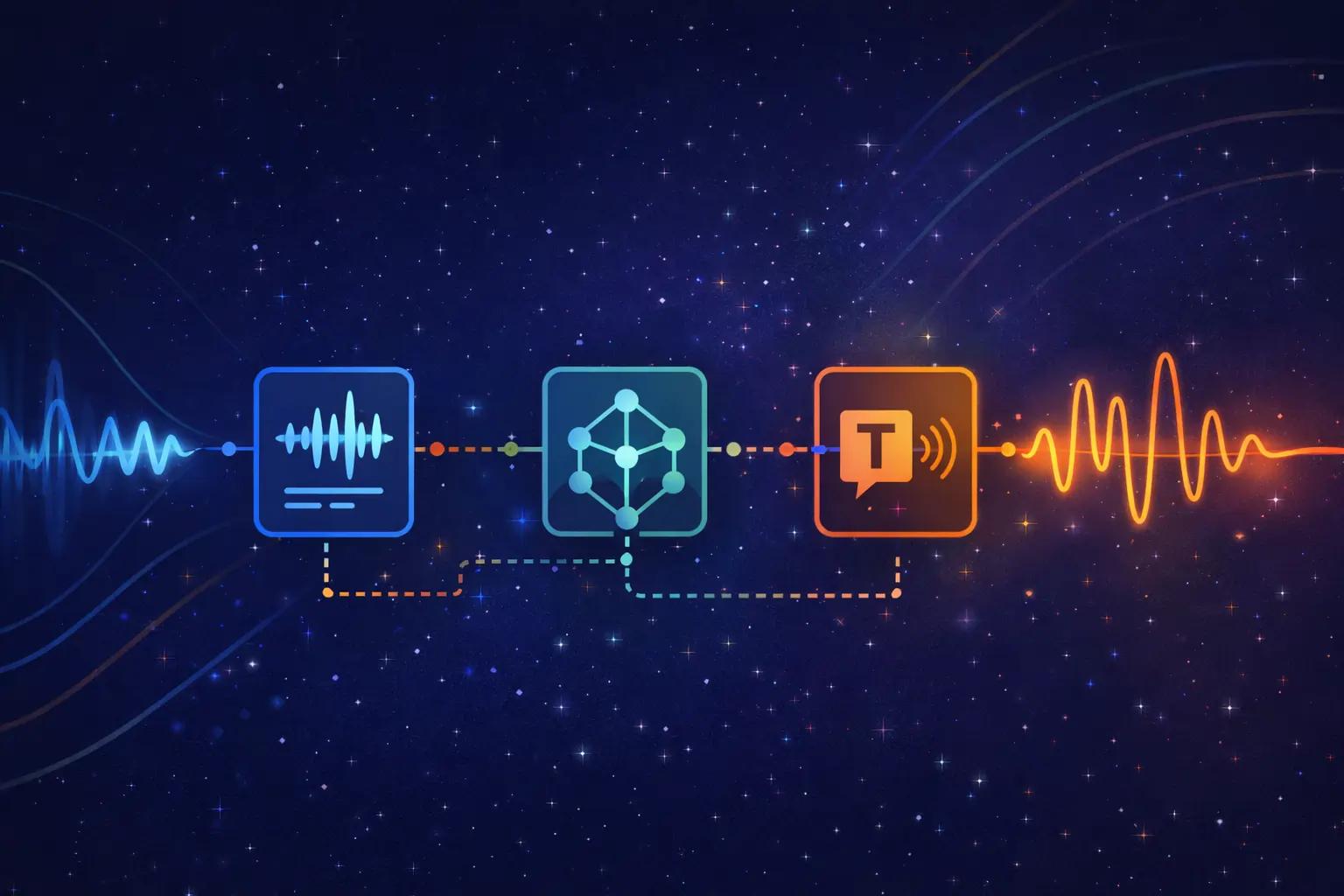
At a high level, a live voice AI conversation follows this loop:
- A person speaks on a phone call
- The system converts speech into text
- AI understands intent and decides what to do
- A response is generated
- The response is spoken back to the caller
- The loop repeats in milliseconds
Each step depends on a different technology. Let’s break them down.
What Is STT (Speech-to-Text) in Voice AI?
Speech-to-Text (STT) is responsible for converting spoken audio into written text.
When a caller says, “I want to reschedule my appointment,” STT produces a text transcript the system can process.
In voice AI, STT must handle:
- Accents and regional speech patterns
- Background noise and call compression
- Interruptions and overlapping speech
- Real-time transcription with low latency
If STT fails, everything downstream fails. Even the most advanced AI cannot recover from poor transcription.
What Is ASR (Automatic Speech Recognition)?
ASR is often confused with STT, but they are not the same thing.
- STT is the output (speech → text)
- ASR is the underlying system that makes STT reliable
ASR includes:
- Audio signal processing
- Acoustic and language models
- Noise suppression
- Confidence scoring
This layer is especially critical for phone calls, where audio quality is far worse than clean microphone input. Production-grade voice AI depends heavily on well-tuned ASR to avoid misheard intent and broken conversations.
What Role Does the LLM Play in Voice AI?
Once speech is converted into text, the system needs to understand meaning, intent, and context. This is where the Large Language Model (LLM) comes in.
The LLM acts as the brain of the voice AI. It is responsible for:
- Understanding what the caller wants
- Maintaining context across multiple turns
- Deciding what to say next
- Triggering actions like CRM updates, bookings, or follow-ups
Without an LLM, voice systems behave like rigid IVRs. With an LLM, conversations become flexible and natural.
That said, LLMs alone are not enough. In voice environments, they must be tightly controlled to prevent hallucinations, latency spikes, or off-script responses during live calls.
What Is TTS (Text-to-Speech)?
Text-to-Speech (TTS) converts the AI’s text response back into spoken audio.
For example: “Your appointment has been rescheduled for Thursday at 4 PM.”
Modern TTS focuses on:
- Natural pacing and intonation
- Human-like pauses
- Consistent voice tone
- Multilingual and localized voices
TTS is where users form instant judgment. Even if STT and LLM performance is strong, robotic or delayed speech immediately breaks trust.
How These Components Form the Voice AI Pipeline
To understand how voice AI works in practice, it helps to think in terms of a pipeline:
- Caller speaks
- ASR/STT transcribes speech to text
- LLM interprets intent and selects the next action
- TTS converts the response into speech
- Caller hears the response
This entire loop happens continuously, often within a few hundred milliseconds.
The quality of a voice AI system is defined not by any single component, but by how smoothly this pipeline runs under real-world conditions.
Voice AI Platforms vs Voice AI Demos
Many voice AI tools perform well in demos but struggle in production.
Why?
Because real calls include:
- Background noise
- Interruptions
- Unpredictable user behavior
- Long, multi-turn conversations
Developer-first platforms like Vapi and Retell offer flexibility for building custom logic, while workflow platforms like Synthflow simplify setup. Full-stack platforms like superU.ai focus on optimizing the entire voice AI pipeline end to end, including telephony, integrations, analytics, and scale.
Understanding how voice AI works helps teams evaluate platforms beyond surface-level features.
AI Voice Agent Architecture Explained
At an architectural level, a production voice AI system includes:
- Telephony infrastructure
- ASR and STT engines
- LLM orchestration and guardrails
- TTS engines
- Workflow and integration layers
- Monitoring, analytics, and fail-safes
This architecture is what allows voice AI agents to handle real business calls reliably, not just scripted interactions.
Summary: How Voice AI Works
To recap:
- STT converts speech into text
- ASR makes transcription accurate in real calls
- LLM understands intent and drives conversation logic
- TTS converts responses back into natural speech
Together, these components explain how voice AI works in modern call automation systems.
Also read: Why AI Voice Agents Are the Defining Theme of 2026
Understand Voice AI Before You Buy
